Navy robot deal quadruples as US looks to ‘outsmart’ China with AI at sea
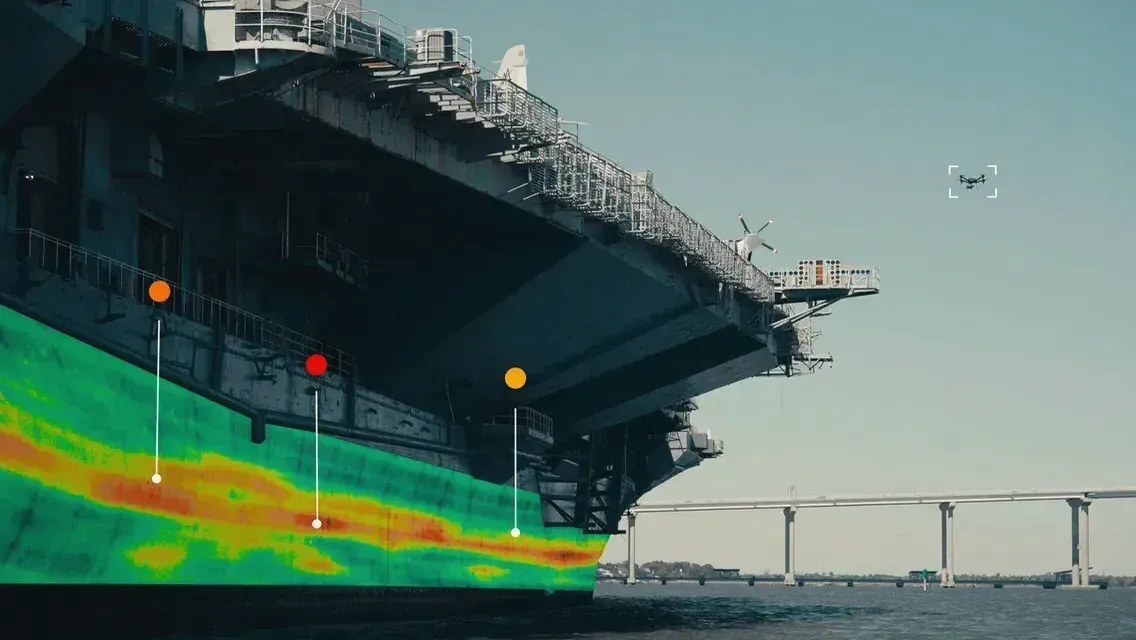
FIRST ON FOX: The U.S. Navy is quadrupling the ceiling on a contract for AI-powered robots used to inspect warships to $300 million.
Just six months after initially tapping the technology to help get ships through maintenance and back to sea faster, the expanded agreement with Pittsburgh-based Gecko Robotics underscores the importance the U.S. military is putting on tech-based solutions. The initial ceiling for the deal was $71 million, but the Navy is pushing to improve fleet readiness amid a widening shipbuilding gap with China.
“While the U.S. may not be able to out-manufacture faster than China, we can outsmart the ways that we maintain, operate and are ready with our vessels,” Gecko Robotics CEO Jake Loosararian told Fox News Digital.
Gecko says its technology can save the Navy up to $8 million in repair costs on a single ship and identify some structural issues up to 50 times faster than traditional inspection methods.
INSIDE TRUMP’S DEAL TO GIVE AMERICAN TAXPAYERS A MASSIVE STAKE IN NEW $6.6B SUBMARINE DEAL
The company is also unveiling a new robot developed specifically for the Navy that can inspect the steel beneath thick coatings on warship decks without first stripping them away.
Dubbed Komodo, the robot scans a ship’s deck to map corrosion and material thickness, giving maintenance crews a picture of what needs to be repaired before more invasive work begins.
“It’s essentially a CAT scan,” Loosararian said. “You’re basically understanding exactly what’s going on.”
Traditionally, determining the condition of steel beneath a ship’s non-skid deck coating can require removing material before crews know the extent of the problem. Komodo is designed to gather that information without first taking the surface apart.
“The robots are able to actually understand what’s wrong without having to take apart the ship to figure out what to fix,” Loosararian said.
In another example cited by Loosararian, an assessment that initially called for roughly 1,200 square feet of repair work was narrowed to about 300 square feet after robotic inspections provided a more precise picture of the damage.
“You reduce and focus the kinds of repairs that you need,” Loosararian said. “You’re repairing less.”
CHINA’S LONG-TERM FINANCES ARE ALL WET AS BILL TO MAINTAIN HUGE NAVY COMES DUE IN 2031
The increased ceiling comes just six months after the Navy awarded Gecko a five-year, $71 million contract vehicle to expand the use of its robotic inspection technology across the fleet.
Under the initial agreement announced in March, Gecko was set to begin work on 18 ships in the U.S. Pacific Fleet, including destroyers, amphibious warships and littoral combat ships.
The company’s wall-climbing robots crawl across hulls, flight decks, ballast tanks and other difficult-to-access areas, scanning for corrosion, metal loss and other structural problems. The data is fed into Gecko’s AI-powered Cantilever platform to help maintenance planners determine where repairs are needed.
The goal is to find those problems earlier, before a ship enters a major maintenance period and crews discover additional work that can extend its stay in the shipyard.
“The biggest savings are just in speed,” Loosararian said. “Speed — you can’t put a price tag on it, especially if you’re in the U.S. Navy right now.”
The expansion comes as Navy leaders seek to push fleet readiness toward 80% while maintenance delays continue to sideline ships that would otherwise be available for deployment.
China already fields a larger battle force than the U.S. Navy and can produce vessels at a pace American shipyards cannot easily match. That has put additional pressure on the Pentagon to keep more of the ships already in the American fleet available for operations.
For Gecko, the longer-term goal is to move beyond finding existing damage and use years of inspection data to anticipate problems before they force ships into longer repair periods.
“You are able to predict exactly what’s going to break before it does,” Loosararian said, allowing maintenance planners to have workers, materials and repair plans ready when a ship reaches the pier or enters a shipyard.
The technology could also reduce the amount of dangerous and labor-intensive inspection work performed by shipyard workers as the industrial base struggles with shortages of skilled labor.
Loosararian said the combination of robotics and AI is ultimately aimed at allowing a limited workforce to spend more time fixing ships and less time determining what needs to be fixed.
For a Navy racing to keep pace with a rapidly expanding Chinese fleet, he argued, getting more out of the ships already in the water could prove just as important as building new ones.
“While the U.S. may not be able to out-manufacture faster than China,” Loosararian said, “we can outsmart the ways that we maintain, operate and are ready with our vessels.”